Something magical is coming your way, a sequel to Cody’s Crazy Curls. I’m jumping up and down with excitement to publish Cody’s Crazy Christmas this month. I poured my heart into creating this Christmas children’s book, so your kids can learn and enjoy reading. It’s been a year of hard work writing, illustrating, formatting and learning. I’m truly grateful to share it with you and your little ones.
On Christmas Eve, Cody’s plan to give his parents the most spectacular surprise turns into an unexpected journey. After hiding the present, he can’t find it anywhere. So with the help of his puppy, they go on a BIG holiday adventure in search of the missing gift.
Your kids will learn about the value of family and the true meaning of Christmas. They will also learn about friendship, teamwork, making good choices, and most importantly, encouraging children to ask for help to manage Big emotions.
Join Cody and his pup as they learn to navigate through misadventures trying to find his parent’s spectacular Christmas surprise in this loving comedic, and fun story.
I hope you and your kids will enjoy it as much as I enjoyed creating this magical kid’s book.
Be on the lookout for updates and the cover reveal.
I’m thankful for those who helped and inspired me along the way. @hiker_therapy @charlesmontgomerybooks @marcoalexart @brooke.vitale @_justdoingourthing_ @jennifer.decker.author @carlisalwayswrighting
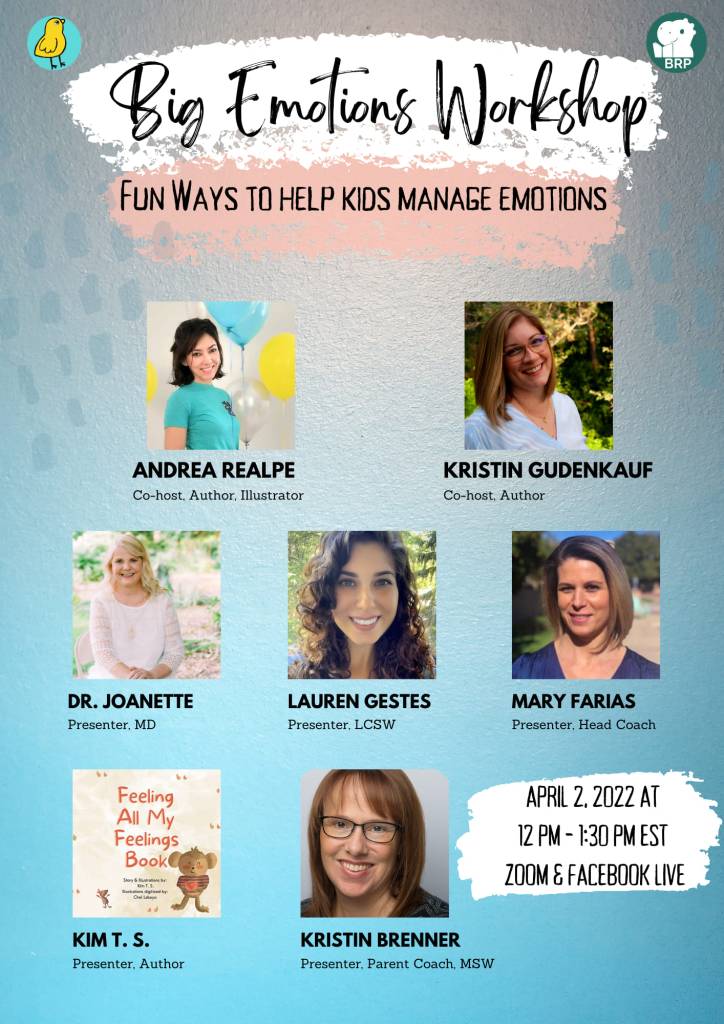
Big Emotions Workshop: Fun Ways To Help Kids Manage Emotions
On April 2nd we organized an amazing event for families, children and caregivers to join our workshop. Kristin Gudenkauf and I are both authors and mothers who realized the strong need to teach kids to accept and manage their emotions.
Emotional Intelligence is an essential part of development in children. It’s the ability to recognize and manage our own emotions and the emotions of others. Cultivating emotional intelligence during early childhood enables children to identify their feelings so that they can better understand these emotions and learn ways to manage them. There are countless benefits to teaching emotional intelligence, among these are, self-awareness, emotional regulation, healthy relationships and empathy.
Handling our emotions can be quite challenging for children and even adults sometimes. Therefore Kristin Gudenkauf and I organized a team of authors, professional therapists, coaches and an MD doctor to help us learn more about ways to handle all of our feelings. Our goal for this workshop is to provide knowledge, tips and tools on how to help children work through their big emotions so they can be better equipped to overcome challenges and have a positive quality of life. One way to teach our children about their feelings is by using engaging picture books.
Kim T.S., Author
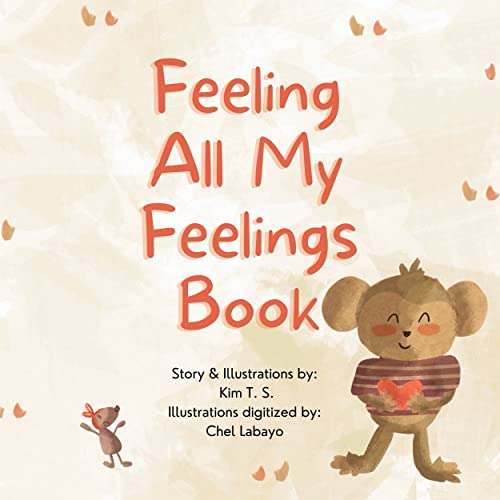
Book: Feeling all My Feelings Book
“Feeling All My Feelings Book” by Kim T.S. And Illustrated by Chel Labayo
Our organizer, author, presenter and owner of Baby Rex Productions Kristin Gudenkauf introduced Kim T. S.. Kim is an author from the Philippines who provided a creative virtual reading at the event. She had a sweet monkey puppet named Kyle teach us that it’s okay to feel all our feelings since they are normal and real. Kim read us her story named “Feeling All My Feelings Book” which is about Kyle and his friend, Tiny Mouse who find ways to accept and learn to navigate small and big emotions.
Emotional Social Parenting (ESP) & Its Impact on Brain Development
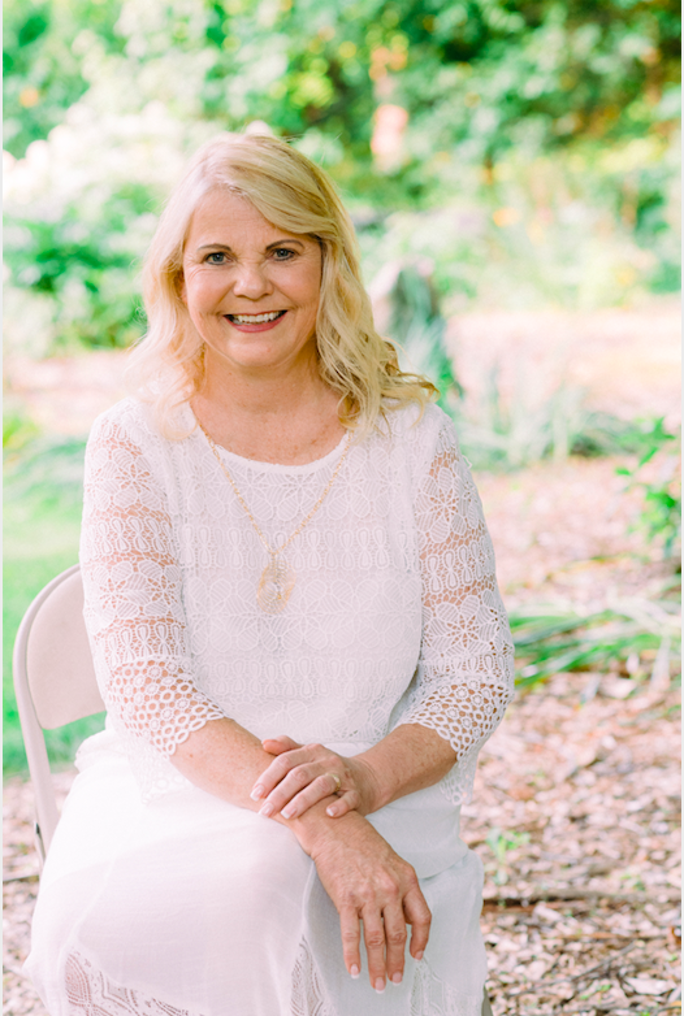
Dr. Joanette Weisse, MD
Our next presenter, an MD, Author and founder of Emotional Social Parenting Dr. Joanette Weisse spoke about Emotional Social Parenting (ESP) and it’s impact on brain development. Dr. Joanette shared various studies in regards to the brain and the importance of Emotional Social Parenting. How we parent can change how our children’s brain develops. One study by the National Institute of Health examined the importance of the interconnections within the brain. Researchers discovered the better the different areas of the brain talked to each other, the more integrated it was and the more successful you will be in all the areas of your life. Emotional Social Parenting is a way to teach kids how to build their pathways for emotional regulation and a successful life.
We also learned about neuroplasticity. We can change the structure of our brain when we learn something new. When our kids experience stimuli, learn and practice certain skills, the brain is busy creating new connections and strengthening neural pathways. However, when we don’t allow our children to experience certain emotions, those pathways needed for emotional regulation and empathy may be impacted. But thankfully neuroplasticity says that we can still alter and modify the neural networks in our brain and create brain integration with exposure and practice. Dr. Joanette shared an interesting study called From mental power to muscle power–gaining strength by using the mind. Researchers found that humans can alter the physical body by using only their thoughts. This teaches us that when we learn something new and practice a skill overtime, the structure of the brain changes but if we don’t continue to strengthen these connections they can weaken or diminish. This is Important to know in regards to our children because if we neglect an area of our child’s development, the neuroconnections may be affected. It’s important to let our kids experience all emotions so that they can develop emotionally and mentally. Emotional Social Parenting helps kids build the pathways needed in order to regulate their big emotions. Therefore the way we parent will determine how our kids will manage emotions in the future. We can teach our kids from the inside out so that we can set them up for success in all areas of their life.
“Giggles in My Heart” by Dr. Joanette Weisse and Illustrated by Kezzia Crossley
Dr. Joanette also read her book “Giggles in My Heart” which was inspired by her granddaughter. It teaches kids to acknowledge, accept, and how to regulate uncomfortable feelings such as fear. It’s a wonderful story about facing your fears and to channel them in a positive way.
The beautiful illustrations along with the story conveys important messages that the way we feel stems from our thoughts. When we fill our thoughts with love and positivity, it allows for space within us to embrace fear.
Andrea Realpe, Organizer, Co-host, Author, Illustrator
Book: Pumpkin Finds His Feelings
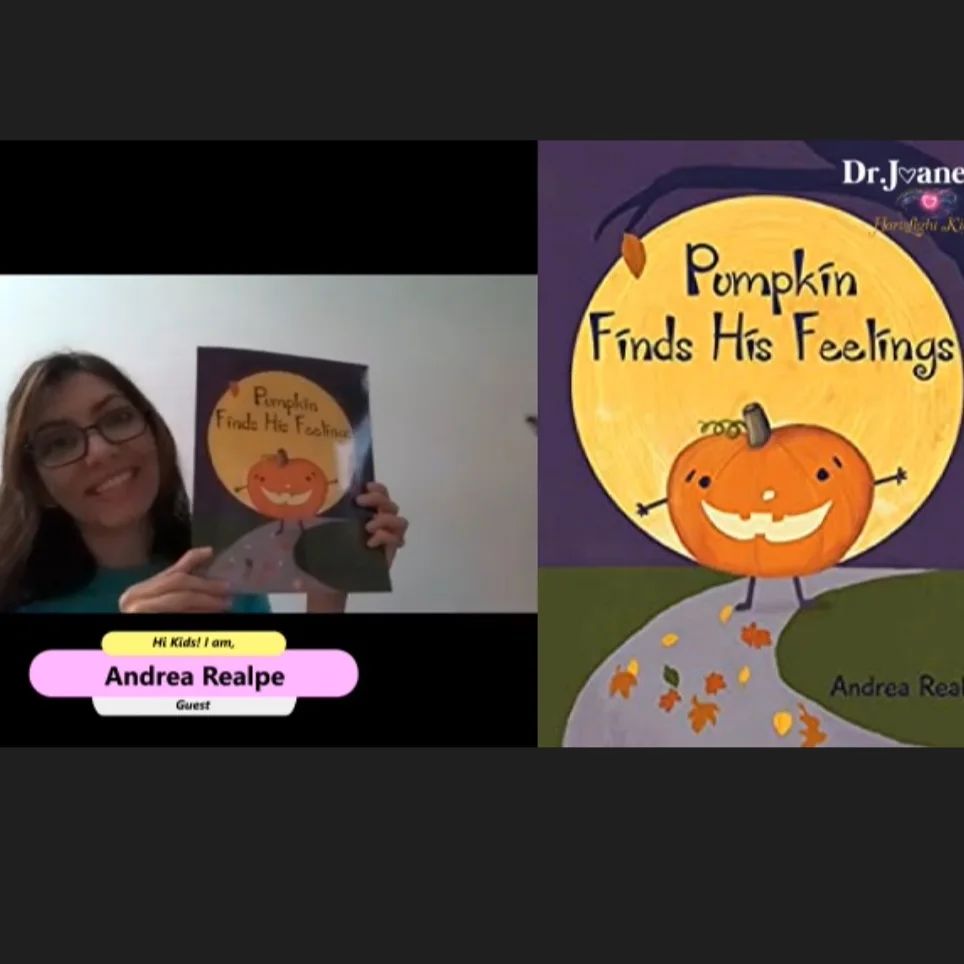
Since this workshop is all about feeling your emotions, I had to share my book called ”Pumpkin Finds His Feelings” inspired by my four year old son. At the preschool age, children are still developing an array of new emotions. These include, anger, shame, guilt frustration, guilt, fear and excitement. Sometimes these strong emotions can be overwhelming for kids since they are developing skills to regulate their emotions. Children need our support to guide them through their Big feelings. We can help them learn to navigate them by helping them name their feelings since they don’t always have the words to express themselves. With my recent book ”Pumpkin Finds His Feelings” I want to help kids name their strong feelings and teach them that it’s okay to experience all emotions including the strong emotions. We want to validate their feelings so that they can learn to embrace them.
Pumpkin Finds His Feelings by Andrea Realpe
The book is about a pumpkin named Pumpkin, he lost his feelings. Despite his stuck-on smile, he can’t feel happy, sad, or anything at all. Pumpkin goes on a journey to find his feelings and meets a few friends with different emotions. He meets a scared scarecrow, a happy cat, an angry turkey and lastly he sees a sad boy named Cody. They try to help him find his feelings along the way. You can find the theme of love, acceptance, and empathy.
Acknowledgment & Acceptance: Removing the Shame of Feeling
Lauren Gestes, LCSW
Lauren Gestes is a Licensed Clinical Social Worker who presented about acknowledging and accepting emotions and removing the shame of feeling. Lauren mentioned a profound quote by Rebecca Eanes, creator of http://www.positive-parents.org and author of The Newbie’s Guide to Positive Parenting:
“So often, children are punished for being human. They are not allowed to have grumpy moods, bad days, disrespectful tones, or bad attitudes. Yet, we adults have them all the time. None of us are perfect. We must stop holding our children to a higher standard of perfection than we can attain ourselves.”
Rebecca Eanes
We expect little ones to act better than a grown adult, yet we aren’t able to behave perfectly at all times. We all have bad days including our children who don’t have the same life experience and who’s brain is still developing. There is so much pressure for little ones to be perfect because we are trying to teach them. It’s okay for them to have bad days as well. We are all human and so we can stick with our little ones through difficult moments.
Lauren states that shame is when a painful feeling that happens when you believe you are something wrong or bad. A child is shamed when they are labeled as something negative, instead of focusing on the behavior. Therefore it becomes a part of their identity. For this reason it may feel personal and permanent rather than situational, temporary, and repairable. This can occur in all types of families even loving and caring ones.
What does shaming sound like? Shaming can sound like, “you’re a bad boy/girl.” Other examples include, ”crying makes you look weak,” and “what were you thinking! I can’t believe you just did that.” These are putting down the child for having emotions or making a mistake. Shaming may lead children to feel powerless and feel that they are unable to change their behavior. They may avoid shameful behavior, become critical and judgmental of themselves, and lie and deny a shameful behavior so that they don’t get into trouble.
Instead of shaming we can accept children’s feelings. We can accept feelings by focusing on the situation instead of the person, get curious about why your child behaved the way they did, brainstorm other ways they can handle a situation, encourage them to identify and share their emotions together, and help them learn coping skills by offering options.
There are no bad kids. There are overwhelmed children who don’t yet have the skills to make a different choice.
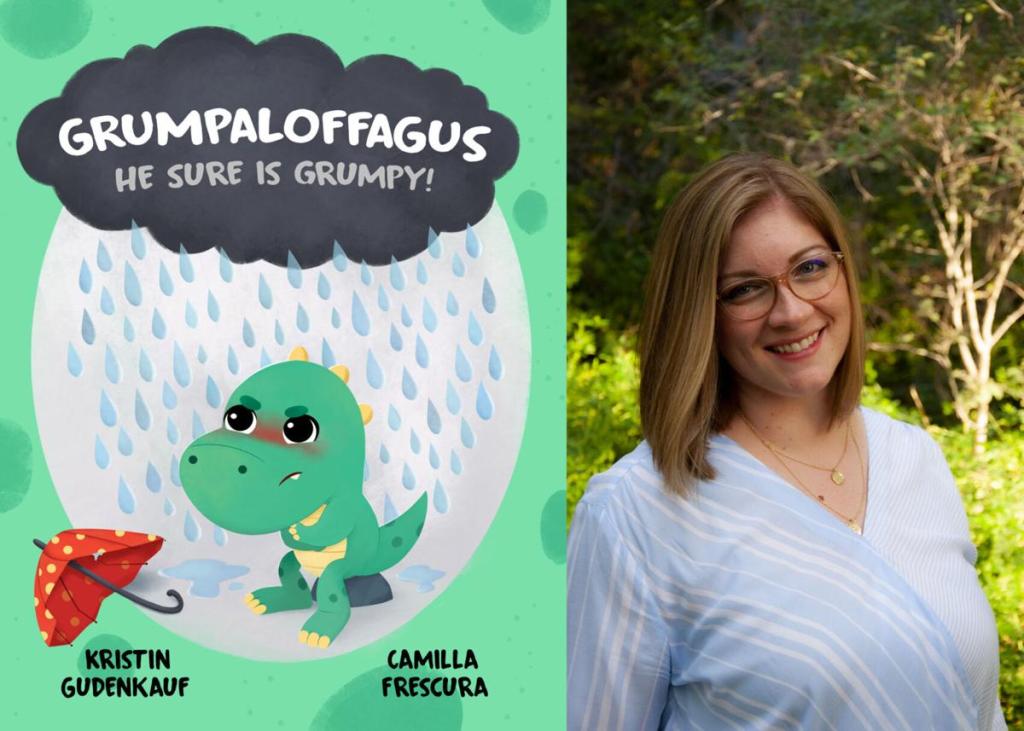
Grumpaloffagus by Kristin Gudenkauf, illustrated by Camilla Frescura
Our co-host and author Kristin Gudenkauf shared her feelings book “Grumpaloffagus.” She wrote this children’s book for her little one. It’s a story about a cute dinosaur learning to understand the different reasons for his grumpiness. This book helps to normalizes all feelings and gives kids the context to why they may be feeling the way they do. It also gives us a way to manage the emotions. “Grumpaloffagus” is a tool for parents, caregivers, and children to have conversations about emotions so it can create an open space for kids to work through their emotions.
Kristin Brenner is a psychotherapist, a parent coach, and the owner of Integrity Mind Body Kristin empowers overwhelmed moms to reclaim the joy and wonder of parenting through mindfulness, self-compassion, and embodiment practices. She also helps people take care of themselves so they can build connections with their kids bringing more ease to their day to day lives. During the workshop, Kristin spoke about the importance of self-care and gave us quick practices that anyone can use when feeling overwhelmed.
When we are able to care for ourselves those around us are better cared for and will be able to take care of themselves and those around them.
Kristin’s definition of self-care is the simple acts that you can do to recognize what you are feeling, identify what you need and take the time to do all those things. Broken down into three parts are:
Recognizing what you feel in the moment.
Identify what you need.
Meeting your own needs.
Self-care does not involve regretting what you will do in the long run, drinking the entire bottle of wine, eating all the chocolate cake… Those are the behaviors that make us feel worse and less connected to our inner strength.
Self-regulation is when we become overwhelmed often times through unconscious mechanisms and then recognize that we are overwhelmed and actively work to take care of ourselves in those moments. An interesting fact shared during Kristin’s talk is that when we are able to self-regulate our own internal state, others around us are able to regulate their own. This includes our children which is called co-regulation. This is important in the parent and child relationship because we learn these self-regulation skills in relationship to others. What we know is that self-regulation cannot occur without coregulation happening first. It has to be learned in relationship. When we practice self-care we activate our nervous system, which quiets the flight and freeze response which warms up our rest and digest response to nourish ourselves.
Two practices that we can do anywhere at any time to feel connected to ourselves in times when we are stressed.
Self-Compassion Break by Kristen Meth and Kris Garmer. Close your eyes. Bring to mind a time when you felt that you struggled. Make sure it is a 2 or 3 on a scale of 1-10. For example, a child wouldn’t get ready for school or didn’t want to eat what you made for dinner. Remember the moment and how it felt. Say to yourself, this is a moment of suffering. This is the practice of awareness. Recognizing and giving it a name. This is a moment of suffering; others would feel the same exact way if they were in the same situations. This phrase reminds us that we are not alone. We feel alone when we are struggling but the truth is that others would feel the same way. Say, may I be kind to myself and place hand over the heart and give yourself that connection. Maybe touch your neck and massage it. Say, may I be kind to myself. This is a moment of suffering other would feel just like me. May I be kind to myself. Release your hand, take a deep breath and open your eyes. Remind yourself you are able to name these feelings, remind yourself that you are not alone and give yourself moment of kindness.
Breath for me and a breath for you. This practice reminds us of a deep connection to our kids. Close your eyes and recognize how you feel in this moment. Choose one child to work with for this exercise. You can take a few breaths. Feeling your breath going in and out. Bring to mind your child, maybe your child needs more love today. Take a breath for your child. Say, I am breathing in for (name your child). Alternating a breath for you and then a breath for your child, inhaling and exhaling. Repeat, a breath for you and then a breath for your child. Giving kindness and compassion to the one you love so much. A breath for me and a breath for you. One for me and one for you. When you’re ready you can open your eyes.
These are great practices to connect to your child in a kind and loving way.
Our bonus speaker, Mary Farias is a former University of Arizona #arizonawildcat gymnast, a gymnastics mindset coach and gym owner, and now a personal success coach. She is a mother and spends her free time helping others achieve their dreams. Mary brings all of our topics together by speaking to us about goal setting and emotions. Goal setting plays a key role in managing emotions – not just for kids, but for adults as well.
When our children are struggling, we can help them by setting goals. Goals give us the opportunity to dream and create our ideal life, they give us a place to go when we are struggling, they are exciting, they give us direction and things to focus on each day, they give us a purpose all your own, and they allow us to celebrate.
The ABCs of Goal Setting:
A-TYPE GOALS An A-type goal is something you already know how to do. If you already have done it, or if you’ve done something very similar to it, then setting a goal to do it again isn’t really a good goal. Let’s say you want to learn how to ride a new bike. You already know how to ride a bike, but you just haven’t ridden this brand-new bike yet. This would be an A-type goal. These goals don’t help you grow and doesn’t engage the imagination.
B-TYPE GOALS A B-type goal is something that you think you can do. For instance, imagine you can ride a bike with training wheels, but you want to ride a bike without training wheels. With practice, this is something you think you can do. This is a B- type goal. This is where people mostly spend their time, in the planning stage. It is well within your comfort zone. They don’t provide you with much growth. For example, a child wants to ride a bike without training wheels, and they think they can do it.
C-TYPE GOALS Now it’s time to get lost in your thoughts. A C-type goal is something that you are going to go after that you have never done before, and it will help you to grow. Think about this: if you know how to reach it, then you need to look for something bigger. Now is the time to allow yourself to think about what you really want, and allow your imagination to wander (parents and children alike!).
Create your C-Type Goal
Allow yourself and your kids to build a fantasy. What do you really want? Ask your children what they really want. Imagination is key here.
Flipping the switch:
Tips on how to replace the negative thoughts with positive thoughts. We all have difficulty at times replacing our negative thoughts with positive ones. How do you “flip the switch”? Here are some practical tips.
Awareness — we cannot change what we are not aware of. The first thing that has to happen is that you must do is be aware that your thoughts are trending in a negative direction. Stay aware of your thoughts. It is the only way that you’ll be able to recognize and control them.
Gratitude — what are you thankful for? What makes you smile? What things in your life bring you joy? When negative thoughts creep in, think about these things.
Goals — what do you want? What do you want your life to look like? Paint a picture in your mind of what it is that you would like your life to be. This will switch your focus to positive rather than dwelling on the negative.
Music — music can quickly change your vibration. What music moves you? What music makes you happy? When negativity strikes, strike back with a good vibe.
Nature — Have you ever noticed how great it feels to take a walk outside or to play with a pet? That’s because nature is perfect. Spend time with perfection, and your attitude cannot help but to improve. (Copyright 2021 IrisBlu Publishing, LLC All Rights Reserved)







 Angy's Books